When a company invests in sonic branding, what exactly should it receive?
The answer depends on the organization's needs. However, a professional sonic branding package typically goes beyond delivering a short sonic logo or a single piece of music.
It should provide a recognizable and adaptable identity that can be implemented consistently across brand experiences.
What Does a Sonic Branding Package Include?
A comprehensive sonic branding project may include brand discovery, competitive analysis, sonic strategy, original composition, a sonic logo, a master brand soundtrack, adaptations, and implementation guidelines.
The precise deliverables depend on the brand's size, industry, and customer touchpoints.
For larger organizations, ongoing governance and asset management may also be part of the project.
Brand Discovery and Sonic Strategy
Before composition begins, the agency should understand the company's business, brand personality, audience, and competitive environment.
This process may involve stakeholder workshops, reviewing existing brand guidelines, analyzing current music usage, and examining competitors.
The objective is to establish what the brand should communicate through sound.
A premium hospitality brand may seek warmth and sophistication. A technology company may prioritize simplicity and innovation. A financial institution may emphasize confidence and reliability.
These qualities inform the musical direction, rather than being left to subjective creative preference.
Sonic Logo and Master Brand Composition
The sonic logo is often the most recognizable part of a sonic identity. It is a concise audio signature designed to represent the brand across different applications.
A larger sonic system may also include a master musical composition, sometimes referred to as the Sonic DNA.
This composition establishes the brand's central melodic, rhythmic, and tonal characteristics.
Together, these assets provide a foundation for developing additional music without losing the brand's identity.
Sonic Adaptations Across Customer Touchpoints
Brands rarely interact with customers through only one channel.
A complete sonic branding package may therefore include adaptations for:
- Television and digital advertising.
- Social media content.
- Corporate events and presentations.
- Mobile applications and notifications.
- Customer service and IVR systems.
- Retail stores and physical environments.
- Sponsorships and seasonal campaigns.
Not every brand requires all these applications at launch.
However, planning for future uses can help prevent inconsistent audio decisions as the organization grows.
Sonic Branding Guidelines and Governance
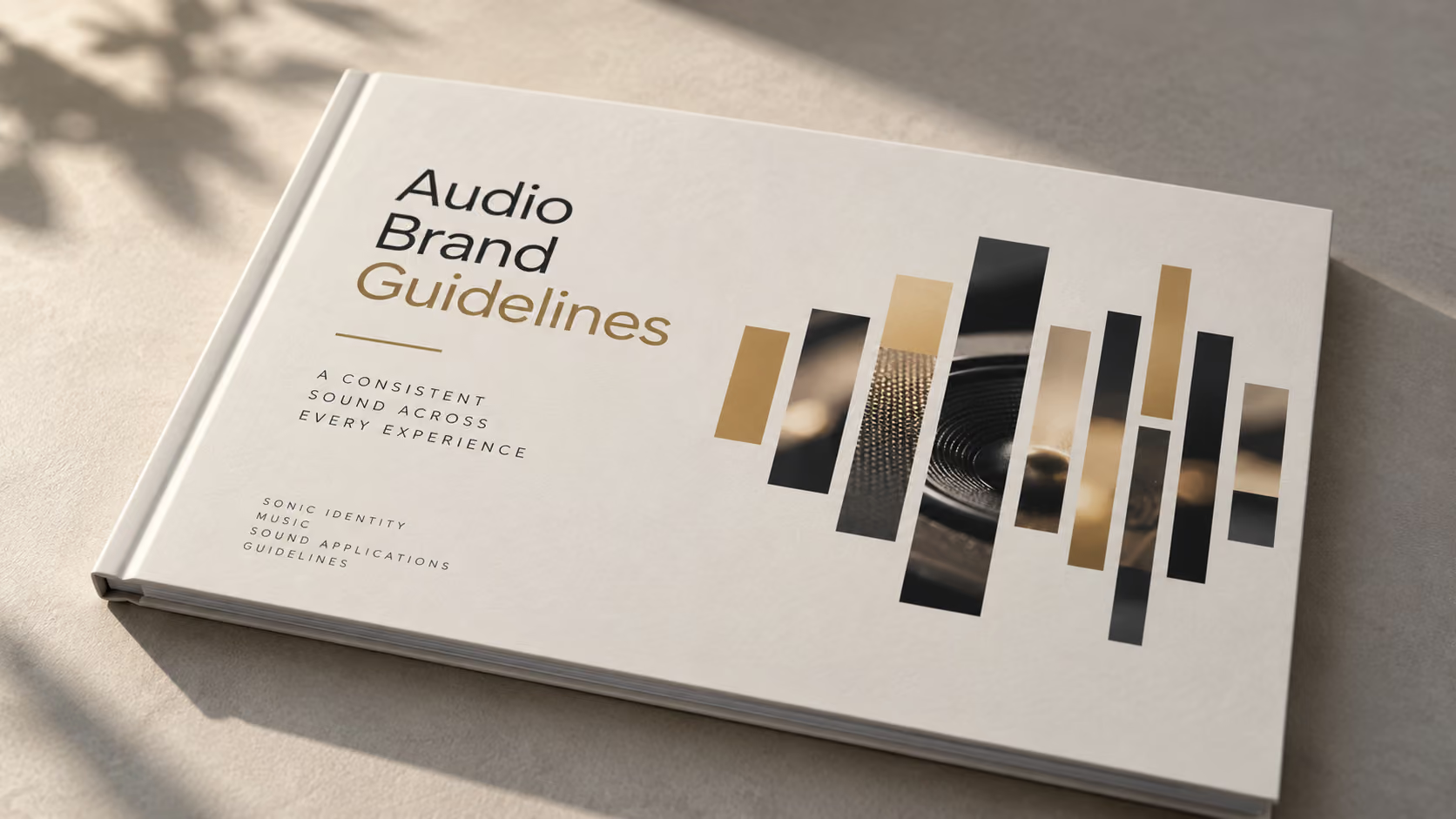
A professional sonic identity needs implementation guidance.
Just as visual brand guidelines explain how a logo, colors, and typography should be used, sonic guidelines establish how sound should represent the brand.
These guidelines may cover musical characteristics, approved adaptations, usage scenarios, audio production standards, and rules for developing new assets.
For organizations with multiple departments, agencies, or regional offices, governance becomes especially important.
A centralized audio identity allows different teams to create content while maintaining recognizable brand characteristics.
How Should Saudi and GCC Brands Evaluate a Package?
Organizations operating across Saudi Arabia and the wider GCC should consider whether the proposed package supports their regional and operational needs.
For example, a telecom brand working across several markets may require campaign adaptations, app sounds, customer service audio, and local activation music.
The objective should not be to purchase the largest possible number of audio files.
It should be to establish a system that addresses the organization's current priorities and can scale over time.
Frequently Asked Questions
- Does every sonic branding package include a sonic logo? Most comprehensive projects include one, although exact deliverables vary.
- Is a sonic branding package the same as music production? No. Sonic branding includes strategic brand development and implementation considerations alongside music production.
- Are adaptations normally included? They may be included, but the number and scope should be defined in the agreement.
- Should a brand receive usage guidelines? For a long-term sonic identity, guidelines are strongly recommended.
- Can a sonic identity expand after the original project? Yes. Additional sounds and adaptations can be developed as new customer touchpoints emerge.
For brands considering a long-term audio identity, the most important question is not simply what the package includes, but how the deliverables support business objectives.
Explore MusicGrid's sonic branding services to understand how strategy, composition, and implementation can come together as one connected brand experience.