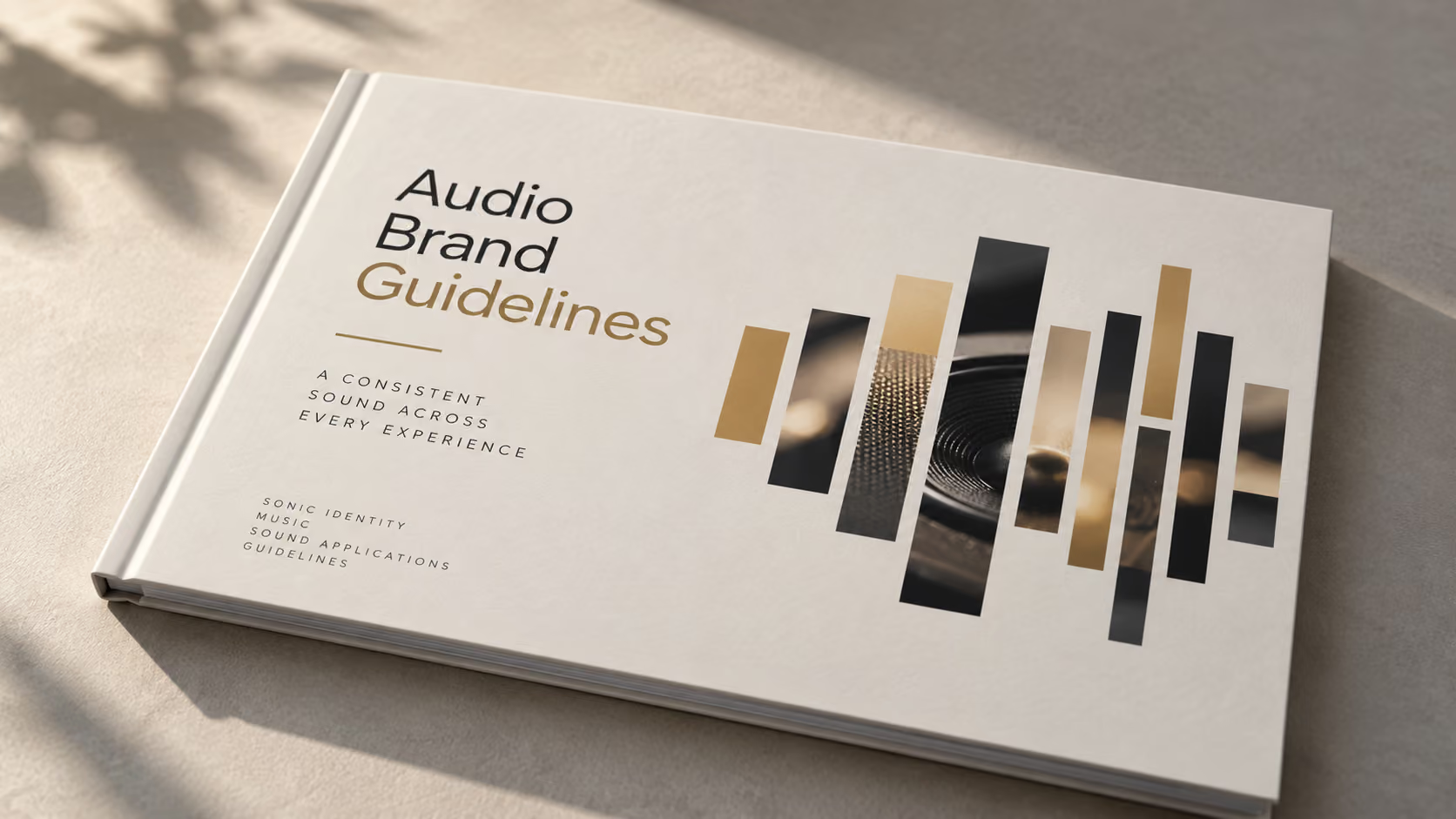
Audio brand guidelines are practical instructions for selecting, adapting, approving, and using a brand's sound across its campaigns, channels, agencies, and customer touchpoints.
A sonic logo file without usage instructions is the beginning of an audio identity, not a finished implementation.
When a brand team approves one identity but five production partners interpret it differently, the problem may not be that the partners are careless.
They may simply lack sufficiently detailed instructions to produce a consistent result.
Why a Sonic Logo File Is Not Enough
Many organizations treat completing a sonic logo as the end of the audio identity project.
The file is delivered, approved, and uploaded to a shared folder.
The next campaign brief goes to an agency. The agency finds the file and then decides how the surrounding music should sound, how the logo should be adapted, and whether the same recording is appropriate for different applications.
These decisions can produce inconsistency.
The agencies may be making reasonable creative choices, but they lack documented guidance connecting those choices to the brand's wider identity.
Research by Ipsos on distinctive brand assets emphasizes the importance of consistent sensory cues in establishing brand recognition.
A recognizable asset becomes more useful when audiences encounter it consistently across relevant touchpoints.
That consistency requires more than simply possessing an audio file.
What Audio Brand Guidelines Should Include
A practical audio brand guidelines document should address ten core areas.
The appropriate level of detail depends on the organization's size, complexity, and number of customer touchpoints.
1. Brand sound principles
Define the intended emotional character of the brand's audio identity.
The guidelines should explain what feels appropriate to the brand, what should be avoided, and how the musical direction should be communicated to internal teams and external suppliers.
2. Core musical material
Identify the melodic, rhythmic, tonal, or other musical characteristics that define the brand's sound.
These are the recognizable elements that should be preserved across different adaptations.
3. Approved audio assets
Document the approved sonic logo versions, campaign music, master compositions, and other audio files.
Each asset should have a clearly defined purpose and intended application.
4. Adaptation rules
Explain which musical elements may change and which should remain consistent.
This can include rules for duration edits, instrumentation changes, alternate arrangements, and mix variations.
5. Music and voice interaction
Establish how music should behave when dialogue, narration, or other voice content is present.
Guidelines may address relative levels, pacing, transitions, and moments when music should be reduced or removed.
6. Customer touchpoint applications
Provide instructions for advertising, digital products, customer service systems, retail environments, events, and other relevant experiences.
Different applications require different approaches to sound.
7. Cultural and language considerations
Clarify how regional or language-based versions should relate to the core identity.
The guidelines should specify which local adaptations are permitted and which require additional review.
8. Rights documentation
Record the relevant usage permissions, territories, media, and other licensing conditions associated with approved audio assets.
9. File and version management
Establish how assets are stored, named, accessed, and updated.
Teams should be able to distinguish current approved recordings from outdated versions.
10. Approval ownership
Define who has authority to approve new audio, adaptations, exceptions, and supplier-produced work.
This framework provides a practical starting point for organizations developing or expanding their sonic branding systems.
What Should Stay Consistent and What Can Change?
Not every customer touchpoint should use an identical recording.
A campaign film, mobile app confirmation sound, and conference opening have different functional requirements.
Consider a hypothetical bank.
Its advertising may conclude with a short sonic logo.
Its mobile application may use a brief payment confirmation sound.
Its branches may use carefully selected ambient music.
Its annual leadership conference may begin with a longer branded musical composition.
Each asset serves a different purpose.
However, if the sounds are developed using the same core musical material and brand principles, they can form a coherent system.
The guidelines should define which elements create that coherence and which may change according to the application.
How to Hand the Audio System to an Agency
When briefing a new agency or production partner, brands should provide more than a reference to their existing music.
A useful handover package should include:
- Current approved audio assets in appropriate formats.
- The latest audio brand guidelines document.
- Clear instructions for each asset's intended use.
- Examples of appropriate and inappropriate applications.
- Rules governing adaptation and editing.
- Relevant licensing and rights information.
- A defined approval process for new audio.
- Contact information for the responsible brand team.
Without these elements, external partners may make independent decisions that are creatively reasonable but inconsistent with the intended sonic identity.
A clear handover helps different suppliers work within the same musical framework.
How to Organize an Audio Asset Library
An operational problem for many organizations is that approved audio files become difficult to locate.
Assets may be distributed across agency servers, old campaign folders, or personal drives.
When someone needs a specific version, they may retrieve an outdated recording or produce something new unnecessarily.
A structured audio asset library should make the correct files easy to identify.
File names should communicate relevant information such as:
- Brand or business unit.
- Asset type.
- Version number.
- Duration.
- Intended application.
- Language, where applicable.
- Approval status or date.
For example, a file name might identify a sonic logo, its approved version, its duration, and whether it is intended for television or digital use.
The library should also identify which files are current and which have been replaced.
The storage system itself does not need to be complicated.
For many organizations, a well-managed shared folder with suitable access controls can be sufficient.
Who Should Own Audio Decisions?
Sonic branding often involves several departments.
The responsibilities should be clearly defined.
Brand teams
Maintain the overall sonic identity, establish the musical principles, and approve significant changes or new foundational assets.
Marketing teams
Manage campaign briefs and ensure external agencies receive the correct guidelines and approved files.
Digital product teams
Apply the sonic identity to mobile applications, interfaces, and other product interactions.
Customer experience teams
Manage relevant sounds across telephone systems, customer service environments, and physical locations.
Legal and procurement teams
Review usage rights, licensing arrangements, and relevant contractual requirements.
External agencies and production partners
Develop new assets within approved guidelines and submit work for review when necessary.
Different organizations may distribute these responsibilities differently.
What matters is that ownership is explicit rather than assumed.
How to Test Sonic Branding Implementation
Creating guidelines is only the first step.
Brands should also evaluate whether those guidelines are being followed.
A practical implementation review can examine four areas.
Asset usage
Are teams using the correct and current versions of approved audio assets?
Agency compliance
Are external production partners following the defined musical direction and adaptation rules?
Brand association
Do listeners recognize or associate the sound with the intended brand?
Research into distinctive brand assets indicates that brand association is an important consideration beyond whether audiences simply like a particular sound.
Touchpoint suitability
Does the audio work effectively in the intended environment?
A sound may technically comply with the guidelines but still be inappropriate for a particular customer interaction.
These operational checks help organizations understand whether the system is being implemented as intended.
They should not be mistaken for direct evidence of increased sales or other commercial outcomes.
A Practical Rollout Plan for Audio Brand Guidelines
Organizations implementing audio guidelines can follow a structured sequence.
Step 1: Inventory existing assets
Collect the audio currently used across campaigns, digital platforms, customer service systems, events, and physical environments.
Identify which assets are approved, outdated, or inconsistent.
Step 2: Define the core principles
Establish the foundational musical characteristics, approved versions, and adaptation rules.
Translate these into clear instructions that internal teams and external agencies can follow.
Step 3: Pilot the guidelines
Apply them to one active campaign and one customer touchpoint.
Use the pilot to identify unclear instructions or missing requirements.
Step 4: Train internal teams and suppliers
Provide the approved asset library and explain how to use it.
Ensure that everyone understands when additional approvals are required.
Step 5: Review implementation
After several campaign cycles, review whether the guidelines are producing consistent results.
Update them where necessary to address new touchpoints, changing brand requirements, or recurring implementation challenges.
How This Applies to Brands in Saudi Arabia and the GCC
Organizations operating across several GCC markets often manage multiple marketing teams, production agencies, and customer experiences.
Maintaining a shared sonic identity requires balancing central brand consistency with local creative requirements.
MusicGrid's portfolio includes projects that demonstrate different aspects of this challenge.
Its work with GOSI involved refreshing an existing sonic identity while preserving its core musical characteristics.
The Trolley project involved developing a cohesive sound system intended to support different brand touchpoints.
UPayments developed a sonic identity with variations for different customer interactions.
These projects illustrate why implementation planning matters alongside creative development.
Explore MusicGrid's project portfolio for additional examples.
Frequently Asked Questions
- What are audio brand guidelines? A documented set of instructions explaining how a brand's music and sound should be selected, adapted, applied, and approved.
- How are audio guidelines different from a sonic logo? A sonic logo is a recognizable audio asset, while the guidelines establish how that asset and the wider sonic identity should be used.
- Can existing campaign music be included? Yes, provided it aligns with the brand identity and the relevant rights allow ongoing use.
- Should every channel use the same soundtrack? No. Different channels can use different assets developed from shared sonic principles.
- Who should approve new music? The responsible brand or marketing team should be defined in the governance structure, with other departments involved when appropriate.
- How should regional adaptations be managed? Regional variations should follow the foundational identity and an agreed approval process.
- How often should audio guidelines be reviewed? Reviews may be appropriate after major brand changes, new customer touchpoints, agency transitions, or recurring implementation issues. An annual review may be useful for established brands.
A recognizable sonic identity requires more than strong creative assets.
It requires a system that allows those assets to be applied consistently as the organization grows.
MusicGrid develops sonic branding strategies that connect creative development with implementation and long-term brand consistency.
To discuss your brand's audio identity and implementation requirements, contact MusicGrid.