Some of the world’s most recognizable brands can be identified without seeing their name or visual logo.
Sometimes, that recognition comes from a short sequence of notes. In other cases, it comes from a catchy melody with lyrics that people remember for years.
These two types of brand assets are often confused, but they serve different purposes.
One is a jingle. The other is a sonic logo.
Understanding the difference helps brands make the right investment. This is especially important in Saudi Arabia and across MENA, where brands communicate across different languages, markets, campaigns and customer touchpoints.
What Is a Jingle?
A jingle is a short, memorable piece of music that usually includes lyrics.
The lyrics may communicate the brand’s name, campaign slogan, product benefit or promotional message.
Jingles are commonly used in television commercials, radio advertisements and promotional campaigns. Their purpose is to make a specific message easier to remember through melody and repetition.
A jingle could be as simple as singing the brand’s name, or it could be a complete song created around a campaign.
The defining feature is usually the presence of words and a clear promotional message.
What Is a Sonic Logo?
A sonic logo, also known as an audio logo or sound logo, is a short and recognizable sound that represents a brand.
It usually lasts between two and five seconds and often contains only a few notes.
Unlike a jingle, a sonic logo does not need to communicate a complete verbal message. Its primary purpose is to create immediate brand recognition.
It acts as the audio equivalent of a visual logo.
A sonic logo can appear at the end of a commercial, when an application opens, after a successful payment, during an event or anywhere else the brand interacts with its audience through sound.
It is usually created as part of a wider sonic branding system, rather than as a standalone campaign asset.
What Is the Difference Between a Jingle and a Sonic Logo?
The simplest way to understand the difference is this:
A jingle helps people remember a message. A sonic logo helps people recognize a brand.
A jingle usually combines melody with words. It may communicate a brand name, slogan or campaign message.
A sonic logo is much shorter and usually does not include lyrics. It acts as a consistent musical signature that audiences can associate with the brand over time.
Jingles are often created for individual campaigns. Sonic logos are generally designed for long-term use across multiple campaigns and customer touchpoints.
Both can be memorable. The right choice depends on what the brand needs the sound to achieve.
When Should a Brand Use a Jingle?
A jingle is useful when the audience needs to remember specific words.
A brand may want people to remember its name, a new product, a campaign slogan, a promotional offer or a simple customer benefit.
Combining words with melody can make that message easier to recall.
This makes jingles particularly effective for campaign-led advertising, retail promotions and mass-market products. They can also create warmth and familiarity when a brand wants its campaign to feel accessible, energetic or entertaining.
However, jingles require careful execution. If the lyrics feel forced or the melody is too predictable, the result can sound dated or overly promotional.
A modern jingle should still reflect the brand’s identity and the expectations of its audience.
When Should a Brand Use a Sonic Logo?
A sonic logo is usually the better investment when the objective is long-term brand recognition.
It is particularly valuable for brands that appear across multiple platforms and customer touchpoints.
A sonic logo can be used in television commercials, digital advertisements, mobile applications, payment confirmations, videos, events, retail environments and customer-service systems.
Because it is short and usually does not depend on language, a sonic logo can work across different markets more easily.
This is important for brands operating across Saudi Arabia and the wider GCC, where the same identity may need to work in Arabic and English.
A well-designed sonic logo gives these different brand interactions one recognizable musical connection.
Why Does the Difference Matter for MENA Brands?
Many MENA brands communicate across multiple languages, markets and cultural settings.
A lyrical jingle created for an Arabic campaign may not work in exactly the same way for an English campaign. Translating the words can change the rhythm, rhyme and memorability of the original piece.
A sonic logo does not usually face the same challenge. Because it communicates primarily through sound rather than language, it can remain consistent across markets.
The same sonic logo could be presented through contemporary electronic production for a digital campaign, regional instrumentation for Saudi National Day or a warmer arrangement for Ramadan.
The execution changes, but the recognizable musical idea remains.
This does not mean every MENA market should sound the same. Language, musical traditions and cultural context still need to be considered when adapting the wider sound.
Can a Brand Use Both?
Yes. A jingle and a sonic logo can perform different roles within the same brand.
A brand may use a jingle for a major advertising campaign while ending the advertisement with its sonic logo.
The jingle communicates the campaign message, while the sonic logo reinforces the brand behind it.
The sonic logo may even be incorporated into the melody of the jingle. This creates a stronger connection between short-term campaign communication and long-term brand recognition.
The key is ensuring that both assets feel like part of the same musical identity. If they use completely unrelated melodies and styles, the brand may still sound inconsistent.
A Sonic Logo Is Not the Entire Sonic Identity
Creating a sonic logo is an important step, but it is not the same as building a complete sonic identity.
A sonic logo is comparable to a visual logo. It is the brand’s shortest and most recognizable musical signature.
A complete sonic identity is more like the wider visual identity system. It can include a core brand theme, campaign adaptations, seasonal music, application sounds, notification sounds, customer-service audio and usage guidelines.
The sonic logo provides recognition. The wider system determines how the brand should sound across different situations.
For example, MusicGrid developed a structured sonic identity for ZATCA that includes a sonic logo, core DNA track and specific adaptations for digital and Ramadan applications.
Each asset serves a different purpose, but they all remain connected to the same brand.
Can a Jingle Become a Sonic Logo?
A short section of a jingle can sometimes become a sonic logo, but only if it works independently.
The selected melody needs to be short, distinctive, easy to recognize and flexible across different musical styles. It must also work without the full lyrics.
A campaign melody may sound memorable within a complete song but lose its identity when reduced to only a few notes.
That is why the transition from a jingle to a sonic logo should be approached strategically. The catchiest part of the jingle is not automatically the strongest brand signature.
It must also remain suitable for future campaigns, platforms and markets.
Which One Does Your Brand Need?
A jingle may be the right choice when you have a specific message that people need to remember.
It may also be suitable when the campaign relies heavily on lyrics or when the content is mainly intended for television and radio.
A sonic logo may be the better choice when you want to build long-term recognition across multiple campaigns, touchpoints and markets.
It is particularly valuable when the brand identity must work consistently in both Arabic and English.
Some brands may benefit from both. Campaign jingles can remain creative and flexible, while a consistent sonic logo connects every campaign back to the brand.
Common Mistakes to Avoid
- Treating a sonic logo as a jingle squeezed into three seconds.
- Creating a catchy jingle that people remember without remembering the brand behind it.
- Following temporary musical trends so closely that the sound quickly becomes dated.
- Using the same cultural approach across every MENA market.
- Creating completely unrelated music for every campaign.
Campaign variety is important, but it should not come at the expense of brand recognition.
Frequently Asked Questions
- What is the difference between a jingle and a sonic logo? A jingle is usually a short song that uses lyrics to communicate a brand name or campaign message. A sonic logo is a brief musical signature designed to create brand recognition.
- Is a sonic logo the same as an audio logo? Yes. Sonic logo, audio logo and sound logo generally describe the same type of brand asset.
- Is a jingle considered sonic branding? A jingle can be part of sonic branding, but a complete sonic identity usually includes additional assets such as a sonic logo, brand theme, campaign adaptations and usage guidelines.
- Can a brand use both a jingle and a sonic logo? Yes. A jingle can communicate a campaign message, while a sonic logo reinforces the brand behind it.
- Which is better for brands operating across MENA? A sonic logo is generally easier to use across different markets because it does not normally depend on language. A jingle may be more effective when audiences need to remember a specific Arabic or English message.
- How long should a sonic logo be? Most sonic logos are approximately two to five seconds long.
- How much does it cost to create a jingle or sonic logo? The cost depends on the strategy, production requirements, number of versions, usage rights and whether the brand needs a standalone asset or a complete sonic identity.
Building the Right Sound Asset
The choice between a jingle and a sonic logo should begin with the brand’s objective.
If the priority is helping audiences remember a specific message, a jingle may be the right answer.
If the priority is building brand recognition across different campaigns, channels and markets, a sonic logo is usually the stronger foundation.
For many established brands, the best solution is a connected system: campaign music and jingles that remain creative and flexible, supported by a consistent sonic logo that always leads back to the brand.
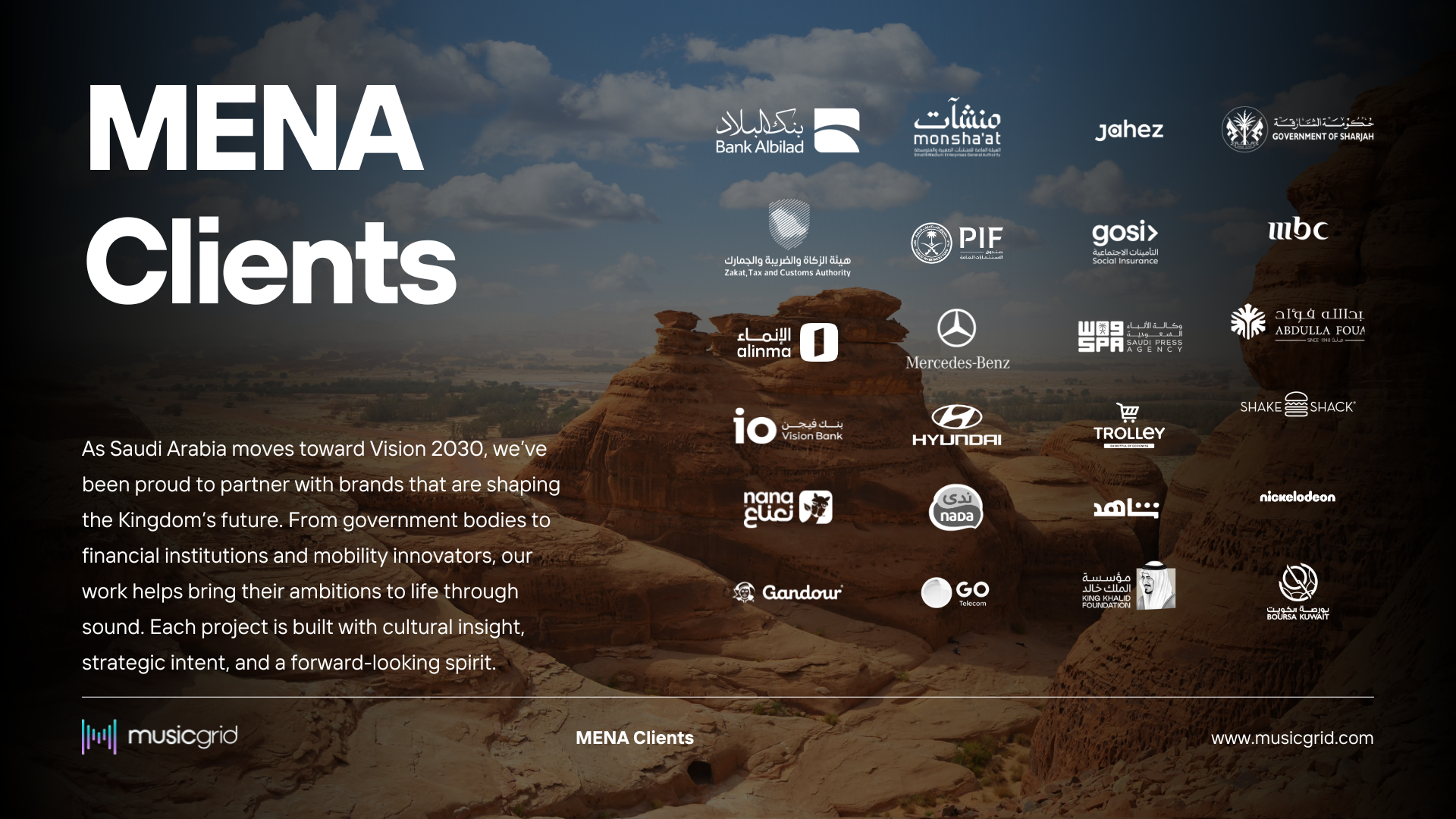
MusicGrid helps organizations across Saudi Arabia, the GCC and the wider MENA region develop everything from advertising jingles and campaign music to complete sonic branding systems.
Contact MusicGrid to discover which sound asset is right for your brand.
.jpg)

.svg)

.svg)
.jpg)
.jpg)
.jpg)
.jpg)
.jpg)
.jpg)
.jpg)
.jpg)
.jpg)




.jpg)


.png)
.png)
.png)
.png)
.png)
.png)
.png)
.png)
.png)
.png)
.png)
.png)
.png)
.png)
.avif)
.jpg)
.jpg)

.png)
.png)
.png)

.png)

.png)








.png)
.png)
.png)
.png)
.png)
.png)
.jpg)
.jpg)
.jpg)
.jpg)
.jpg)
.jpg)

.jpg)
.jpg)
.jpg)
.jpg)
.jpg)
.jpg)
.jpg)
.jpg)

.png)
.jpg)

.jpg)

.png)
.png)


.png)
.png)


.png)
.jpg)
.jpg)
.jpg)

.jpg)
.png)
.png)
.png)

.svg)
.svg)


.svg)
.svg)

.svg)


.svg)