Your CMO signs off on sonic branding. The sound launches. It plays across apps, ads, call centers, and websites. Then someone in the boardroom asks the question everyone's been thinking: "What did it actually do?"
That's where most sonic branding conversations break down.
Most GCC brands can tell you exactly how a visual rebrand performed. They track logo recognition, colour association, and design impact through structured surveys. But when it comes to sound, many still rely on feedback like "people seem to like it" or "the ads feel more polished now."
The problem isn't that sonic branding doesn't work. The problem is that most brands don't measure it properly.
The Measurement Gap
Here's what happens. A Saudi bank invests in a custom sonic identity for its mobile app. Notification sounds feel refined now. Hold music carries the brand. Call center greetings are consistent. But without a measurement framework in place, the only data the finance team sees is the same app engagement metrics they've always tracked.
Did sonic branding improve those numbers, or did something else? No one knows.
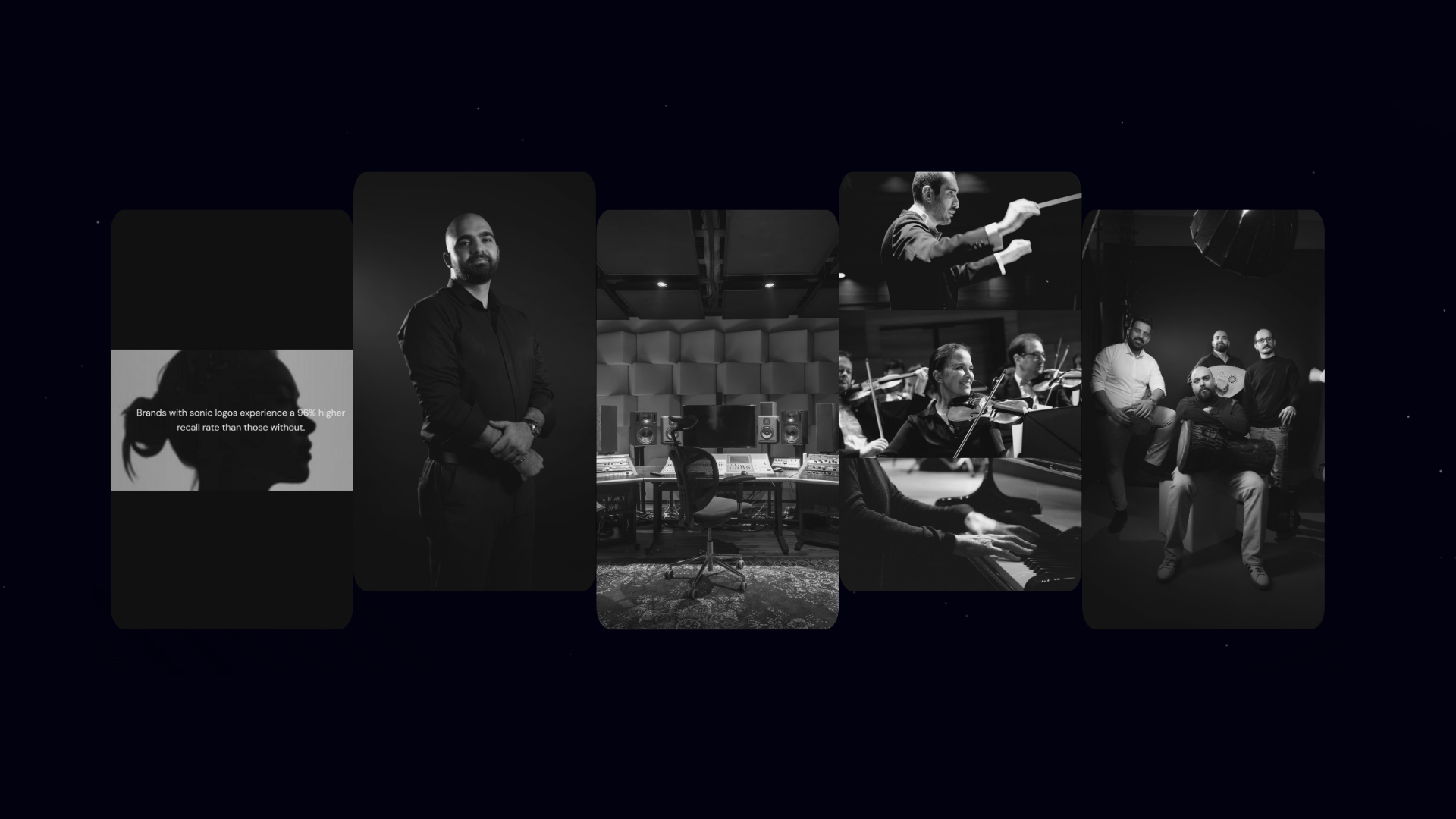
The research is clear: audio branding improves brand recall by up to 96 percent compared to visual-only campaigns. But that statistic doesn't help a brand manager explain the specific impact to their CEO. Numbers matter to boards. Emotion and intuition don't.
What You Should Measure Before Sound Enters the System
Before a single note of your sonic identity launches, you need a baseline.
Brand recall in your market. Run a simple survey in KSA or your relevant GCC market. Ask a representative sample: "Name the major brands in the banking sector (or retail, or government)." Track unaided recall. This is what people remember without prompting. Now ask the same people to name brands when you give them category hints. This is aided recall. Document both numbers clearly. This is your starting point.
Campaign response rates today. If you're testing sonic branding in campaigns or apps, lock in your current metrics now. How many people click through your ads without sound? How long do they spend in your app? What's your call-center satisfaction score? Write these down. Don't guess. Don't estimate. Get real numbers from your analytics, your CRM, your survey tools.
Emotional perception of your brand now. Before making any sonic changes, ask your audience how they feel about your brand. Are you seen as trustworthy? Modern? Local? Caring? Use simple, five-point scales. "How much would you trust this brand with your money?" "Does this brand feel like it understands the market I'm in?" These become your emotional baseline.
You can collect this baseline in a single survey wave. It takes two weeks. It costs far less than the sonic branding work itself. And it's non-negotiable if you want real proof later.
The Core Metrics: What Actually Tells You if Sound Works
Once sound is live, track these.
Recall and recognition. This is the first metric. Run a survey in which you play only the audio logo (no visuals, no brand name) and ask, "What brand is this?" Measure unaided recognition. This indicates whether people can identify your brand from sound alone.
Then measure speed. How long does it take them to recognize it? One second? Five? Three seconds is typically the sweet spot for audio logos. Fast recognition means the sound is distinctive and memorable.
In GCC markets, you should aim for 70-80% recognition within six months of launch. Global benchmarks sit around 80 to 90 percent for mature brands like Intel or Netflix, but you're building from scratch in a different market. 70 to 80 is credible progress.
Attribution in real moments. This is harder but more valuable. Where do customers actually hear your sound? On a notification after a payment. In a hold queue. At the start of an app. These are moments of action, not moments of passive exposure.
Track whether customers who hear your sonic identity in these moments are more likely to complete the action. Did they finish the transaction? Did they stay on the line instead of hanging up? Did they return to your app the next day?
This requires split testing. Run your notification sound for one week, then remove it the next week, and compare completion rates. Or test your revised hold music against the old track. The difference indicates whether the sound is actually changing behavior, not just sounding better.
Customer satisfaction in audio touchpoints. Call centers are gold for this. After a customer service call, ask: "How satisfied were you with this call?" Now separate your data. Review satisfaction scores for calls handled with your new sonic branding (greetings, transfer sounds, voicemail music) versus the old system.
The same applies to apps. Track Net Promoter Score (NPS) for users who've heard your sonic identity versus those on older app versions without it. If NPS goes up by 3 to 5 points after six months, that's real impact.
A Simple Framework CMOs Can Actually Use
Divide your measurement into three phases.
Weeks 1 to 4: Launch and initial exposure. Your sonic identity goes live. At week two, run a quick survey of 200 to 300 people in your market. Ask unaided recall, recognition speed, and emotional response. You're not looking for huge shifts yet. You're ensuring people hear it and that it lands as intended.
Months 2 to 6: Building memory. Repeat the same recall and recognition survey every two months. You should see uplift here. Unaided recall climbs from 20 percent to 40 percent to 60 percent. Recognition speed improves. Run your attribution tests during this window too. Compare app engagement, transaction completion, or call satisfaction against the baseline.
Month 12 and beyond: Long-term equity. By month twelve, your sonic identity should be hitting the recall and recognition targets (70 to 80 percent in your market). Now you're measuring whether it's sticky. Run annual tracking. Do people still recognize it a year later? Can new customers identify it? Is it becoming shorthand for your brand the way "ta-dum" is for Netflix?
This isn't complicated. It's consistent.
What to Track in Your Measurement Dashboard
Keep it simple. Your dashboard should have five rows.
Metric 1: Unaided recall. "What brands do you associate with this sound?" Percentage of the target audience who name your brand.
Metric 2: Recognition rate. "Can you identify the brand from the audio logo alone?" Percentage correct.
Metric 3: Recognition speed. Average time from hearing the sound to naming the brand. Aim for under three seconds.
Metric 4: Behavior lift. Percentage improvement in transaction completion, call satisfaction, or app engagement when the sonic identity is present versus absent.
Metric 5: Emotional alignment. "Does this sound feel trustworthy, modern, local?" Percentage of respondents who rate the sound as matching the intended brand attribute.
That's it. Five metrics. Tracked every two months for the first six months, then quarterly. They converge on a single question: Is sonic branding working?
Real Numbers from Real GCC Contexts
Abstracted from the region: A Saudi financial services app launched a sonic identity for transaction notifications. Within three months, recognition hit 65 percent in their user base. But more importantly, users who heard the notification sound completed transactions at 8 percent higher rates than users with generic tones. That translates directly to revenue.
A government entity redesigned its call center greeting and hold music as part of a broader modernization. Customer satisfaction on calls improved by 2.7 points (on a ten-point scale) in the six months after launch. That's not massive, but it's real and compounds across thousands of calls per month.
A retail brand in the UAE integrated its sonic identity into stores, apps, and advertising. Within twelve months, unaided brand recall increased by 18 percentage points. Their average customer visit duration in physical stores rose by 12 percent. Did sonic branding do all of this? No. But it was a measurable piece of the growth.
The pattern: Sound works. But only when you measure it.
The Checklist for Your Team Before You Brief Your Agency
Before you commission sonic branding or hand it off to your team, do this.
Document today's state. Brand recall. Campaign response rates. Satisfaction scores. Write them down. Be specific. "Our mobile app has a 28-day retention rate of 54 percent." Not "retention is okay."
Define what success looks like. Don't say "we want people to recognize our sound." Say "we want 75 percent of our target audience to correctly identify our brand from the audio logo alone within six months." Specificity allows measurement.
Assign ownership. Who's responsible for running the recall surveys? Who tracks app engagement metrics? Who pulls the satisfaction data? Assign one person per metric. Unclear ownership kills follow-through.
Set your measurement cadence. Weeks 1 to 4: bi-weekly check-in. Months 2 to 6: bi-monthly tracking. Month 12 onwards: quarterly. Write it in the project plan now, not later.
Budget for testing. A professional recall survey costs $2,000 to 5,000 per wave. Attribution testing via split platforms costs $1,000 to $ 3,000 per month. This isn't trivial, but it's a fraction of what you're spending on sonic branding itself. Include it in your brief.
The Real Return
Sonic branding isn't magic. It won't fix a broken app or make a bad product sound good. But in a crowded market where GCC brands increasingly compete on the same features, visuals, and copy, sound is the one dimension most brands haven't yet claimed.
When you measure it properly, you stop guessing about whether it's working. You start knowing. And knowing is what makes the investment defensible to the board.
Your sonic identity should be as accountable as your visual identity. Same rigor. Same metrics. Same expectations of impact.
That's how you turn sound from "nice to have" into "core to our brand strategy."
.png)

.svg)

.svg)
.jpg)
.jpg)
.jpg)
.jpg)
.jpg)
.jpg)
.jpg)
.jpg)
.jpg)




.jpg)


.png)
.png)
.png)
.png)
.png)
.png)
.png)
.png)
.png)
.png)
.png)
.png)
.png)
.png)
.avif)
.jpg)
.jpg)

.png)


.png)

.png)

.png)






.png)
.png)
.png)
.png)
.png)
.png)
.jpg)
.jpg)
.jpg)
.jpg)
.jpg)
.jpg)

.jpg)
.jpg)
.jpg)
.jpg)
.jpg)
.jpg)
.jpg)
.jpg)

.png)
.jpg)

.jpg)

.png)
.png)


.png)
.png)


.png)
.jpg)
.jpg)
.jpg)

.jpg)
.png)
.png)
.png)

.svg)
.svg)


.svg)
.svg)

.svg)


.svg)