Music can completely change how a television commercial feels.
The same film can appear emotional, exciting, premium or forgettable depending on the soundtrack behind it.
Yet music is often introduced late in the production process. The film is edited, the voice-over is recorded and the team begins searching for a track that fits.
This may produce a suitable soundtrack, but it limits what the music can contribute to the story and the brand.
Original TV commercial music is created around the campaign from the beginning. It follows the structure of the film, supports important moments and reflects the intended brand personality.
For campaigns in Saudi Arabia and the wider GCC, the music must also consider language, culture, audience expectations and the different formats required for broadcast and digital media.
What Is TV Commercial Music Production?
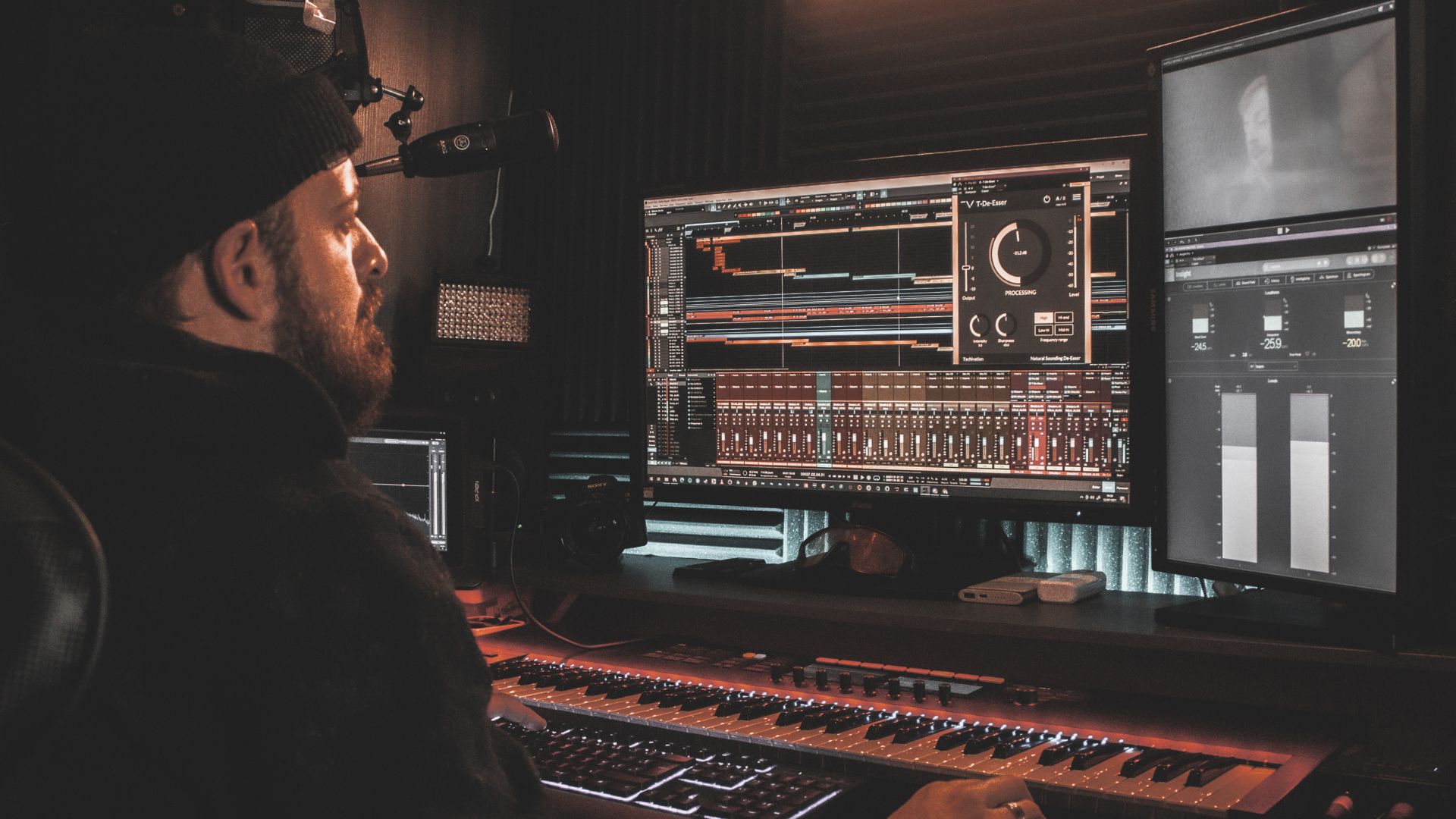
TV commercial music production is the process of creating and preparing music specifically for a television advertisement.
The process may include:
- Developing the musical direction
- Composing original music
- Recording musicians or vocalists
- Synchronizing the music with the film
- Producing alternative creative directions
- Revising the approved composition
- Mixing the music with voice-over and sound design
- Mastering the final soundtrack
- Delivering broadcast and digital versions
The music may be purely instrumental, feature vocals or include a complete advertising jingle.
The right approach depends on the campaign’s message and what the audience should remember.
Why Does Music Matter in a TV Commercial?
A commercial has limited time to create an emotional response.
Music helps establish the mood immediately.
It tells the audience whether the story should feel warm, exciting, serious, humorous, premium or inspiring—often before the first sentence is spoken.
Music also shapes the pace of the film.
It can build anticipation before a product reveal, create space for an emotional moment or give the final brand appearance more impact.
Effective TV commercial music can:
- Capture attention
- Establish the emotional tone
- Support the story
- Strengthen important visual moments
- Make the edit feel more connected
- Reinforce the brand’s personality
- Improve memorability
- Create a stronger ending
The music should not compete with the advertisement. It should make the complete film more effective.
Start With a Clear Creative Brief
The first step is understanding the campaign.
A music brief should explain:
- The campaign’s purpose
- The target audience
- The main message
- The desired emotional response
- The brand’s personality
- The structure of the film
- Where the commercial will appear
- The required durations
- The role of regional culture
- Whether Arabic or English vocals are involved
The brief should also identify what the music needs to achieve at different points in the film.
For example, the opening may need to capture attention, the middle may require emotional development and the ending may need to support the product or brand reveal.
Without a clear brief, musical feedback can quickly become subjective.
Define the Emotion More Precisely
Words such as “emotional,” “modern” and “premium” are commonly used in music briefs.
However, these words are open to interpretation.
An emotional soundtrack could express warmth, nostalgia, pride, hope, belonging or sadness. A modern soundtrack could feel electronic, minimal, experimental or energetic.
The brief should define the intended emotion more clearly.
Instead of asking for music that feels “inspiring,” consider whether the audience should feel:
- Proud of national progress
- Excited about a new product
- Reassured by a trusted institution
- Emotionally connected to family
- Optimistic about the future
- Curious about the brand
- Motivated to take action
Clear emotional direction helps the composer create music that supports the actual purpose of the commercial.
Decide When Regional Influence Is Needed
Not every Saudi or GCC commercial needs to use traditional instruments.
Regional influence should be included when it supports the brand, audience and campaign story.
A Saudi National Day campaign may require a strong cultural identity. A technology advertisement may use regional influences more subtly. A multinational brand may want to communicate local relevance while maintaining its global positioning.
Cultural influence can appear through:
- Rhythm
- Melody
- Musical scales
- Instrumentation
- Vocal style
- Language
- Performance
- Production techniques
The goal is not simply to make the soundtrack sound “Arabic.”
It should feel appropriate for the specific market and brand.
MusicGrid’s work on regional campaigns brings together cultural understanding and modern production to create original advertising music that feels relevant without relying on predictable musical clichés.
Compose the Music to Picture
Original TV commercial music can be written directly around the film.
This is known as composing to picture.
The composer follows the edit and builds the music around important visual and narrative moments.
These may include:
- Scene changes
- Product appearances
- Emotional transitions
- Voice-over pauses
- On-screen text
- Moments of silence
- Calls to action
- Logo reveals
The music can rise, pause or change at exactly the right moment.
This creates a stronger connection between the soundtrack and the story than using a pre-existing track that was not composed around the film.
However, the music should not respond to every visual movement. Too many musical changes can make the commercial feel busy.
The strongest scores support the overall story while giving important moments space.
Plan Around the Voice-Over
Many television commercials in Saudi Arabia and the GCC rely heavily on voice-over.
Music must support the narration without making the words difficult to understand.
This should be considered during composition—not only during the final mix.
The arrangement may need to become simpler while the voice-over communicates an important message. Melodic instruments should avoid competing with the vocal range, while percussion and bass should support the pace without overwhelming the narration.
Arabic and English voice-overs may also require different musical adjustments.
The languages have different rhythms and phrase lengths. A pause that works beneath an English sentence may not appear in the same place in the Arabic version.
If both language versions are required, they should be tested separately.
Consider Sound Design Early
Music is only one part of the commercial’s sound.
The final mix may also include:
- Voice-over
- Dialogue
- Environmental sound
- Product sounds
- Transitions
- Sound effects
- A sonic logo
These elements should work together.
If music and sound design are developed separately without coordination, they may compete for the same space.
For example, a major musical impact may cover an important product sound. A busy arrangement may distract from a quiet emotional scene.
Considering the complete audio direction from the beginning creates a cleaner and more intentional result.
Connect the Commercial to the Brand’s Sonic Identity
A television commercial may have its own creative concept, but it should still sound connected to the brand.
If the organization already has a sonic identity, recognizable musical elements can be integrated into the soundtrack.
These may include:
- The sonic logo
- A core melody
- A signature rhythm
- A recognizable instrument
- A specific sound texture
- A consistent emotional quality
The elements do not need to dominate the entire soundtrack.
They can appear subtly within the composition or become more noticeable during the final brand reveal.
This allows the campaign to have a fresh creative direction while continuing to build long-term recognition.
Prepare Different Musical Directions
Music is subjective, so it can be useful to explore more than one creative direction during the early stages.
Each direction should represent a meaningful strategic choice rather than a small variation of the same idea.
For example, one direction may feel warm and human, while another feels bold and progressive.
The options can then be evaluated according to:
- Brand fit
- Emotional response
- Cultural relevance
- Originality
- Relationship with the film
- Long-term usability
- Stakeholder feedback
The objective is not simply to select the track most people personally enjoy.
It is to choose the direction that best performs the role defined in the brief.
Manage Feedback Clearly
Feedback such as “make it more exciting” or “make it sound more premium” can be interpreted in several ways.
More excitement could mean a faster tempo, stronger percussion, a bigger arrangement or a more energetic melody.
Clear feedback should identify:
- Which section needs to change
- What is not currently working
- What the audience should feel instead
- Whether the issue concerns composition, instrumentation or production
- How the change should support the film
Consolidated feedback is especially important when several stakeholders are involved.
Conflicting comments from different people can weaken the creative direction and extend the production timeline.
Produce the Final Soundtrack
Once the composition is approved, the music moves into full production.
Depending on the project, this can involve:
- Live instrumentalists
- Regional musicians
- Vocalists
- Orchestral recording
- Electronic production
- Sound design
- Editing
- Mixing
- Mastering
Live performance can add emotion and cultural detail that may be difficult to reproduce digitally.
However, not every project requires a full live recording. The production approach should be based on the creative direction, campaign scale and intended sound.
The final result should feel polished on television while also translating effectively to phones, laptops and social media platforms.
Create Versions for Every Campaign Format
A television commercial rarely exists in only one duration.
The campaign may include:
- A 60-second main film
- A 30-second commercial
- A 15-second edit
- Six-second advertisements
- Vertical social media versions
- Radio advertisements
- Event presentations
- Arabic and English versions
The music should be designed with these formats in mind.
Simply cutting the middle of a completed soundtrack may remove important musical development or create an unnatural ending.
Where possible, each version should be edited intentionally so it maintains a clear beginning, progression and conclusion.
Request the Right Deliverables
At the end of production, the brand or agency may need more than one finished audio file.
The delivery package may include:
- Full-length music master
- Shortened versions
- Instrumental versions
- Versions without vocals
- Separate musical stems
- Music-only mixes
- Final commercial mixes
- Broadcast WAV files
- Digital versions
- Alternative endings
- Sonic-logo versions
Stems provide separate files for elements such as percussion, melody, bass and vocals.
They make it easier to adjust the music for different voice-overs, edits and future campaign applications.
Clarify Rights and Usage
Before production begins, the brand and music partner should agree on how the soundtrack can be used.
The agreement may need to define:
- Media and platforms
- Countries and territories
- Length of use
- Ownership of the composition
- Ownership of the master recording
- Performer and vocalist rights
- Adaptation rights
- Use by partner agencies
- Future campaign usage
These details are particularly important for regional campaigns that may expand across multiple GCC or MENA markets.
Clear rights prevent confusion and allow the brand to use the finished music confidently.
Frequently Asked Questions
- What is original music for a TV commercial? It is music composed specifically around a commercial’s brand, story, timing and emotional direction.
- How is original commercial music different from stock music? Original music is created for the campaign and can follow the film precisely. Stock music already exists and may also be licensed by other brands.
- Can one soundtrack be used for television and social media? Yes, but dedicated edits should usually be created for each duration and format.
- Should Saudi commercials always use Arabic instruments? No. Regional instruments should only be used when they support the brand and campaign concept. Cultural relevance can also be expressed through rhythm, melody, vocals and production style.
- Can the same music work with Arabic and English voice-overs? Yes, although each language version may require adjustments to the arrangement and mix.
- What are musical stems? Stems are separate audio files containing groups of elements such as percussion, melody, bass or vocals. They allow greater flexibility when creating new edits.
- Who owns original commercial music? Ownership depends on the agreement. The brand should clarify composition, master, territory, duration and adaptation rights before production begins.
Creating Music That Strengthens the Commercial
The best TV commercial music does more than fill the space beneath the visuals.
It guides emotion, strengthens the story and helps audiences connect the campaign with the brand behind it.
For campaigns in Saudi Arabia and the GCC, effective music production also requires cultural understanding, multilingual planning and flexibility across broadcast and digital formats.
MusicGrid creates original music and campaign soundtracks for brands across Saudi Arabia, the GCC and the wider MENA region.
We manage the complete process from creative direction and composition to production, mixing and final delivery.
Contact MusicGrid to create original music for your next commercial.
.jpg)

.svg)

.svg)
.jpg)
.jpg)
.jpg)
.jpg)
.jpg)
.jpg)
.jpg)
.jpg)
.jpg)
.jpg)
.jpg)
.jpg)
.jpg)




.jpg)



.png)
.png)
.png)
.png)
.png)
.png)
.png)
.png)
.png)
.png)
.png)
.png)
.png)
.png)
.avif)
.jpg)
.jpg)

.png)
.png)
.png)

.png)

.png)







.png)
.png)
.png)
.png)
.png)
.png)

.jpg)
.jpg)
.jpg)
.jpg)
.jpg)
.jpg)

.jpg)
.jpg)
.jpg)
.jpg)
.jpg)
.jpg)
.jpg)
.jpg)

.png)
.jpg)

.jpg)

.png)
.png)


.png)
.png)


.png)
.jpg)
.jpg)
.jpg)

.jpg)

.svg)
.svg)


.svg)
.svg)

.svg)


.svg)